Surf Code / Ethics: The Good Vibes of the Sea Unwritten rules. Full respect. Waves for everyone.
The golden rules of surf
Unwritten rules that should be carved in marble at each spot.
If you’re new to surfing, here’s the first thing to wrap your head around: out in the ocean, there are no traffic lights, no referees, and no whistle-blowing lifeguards. What you do have, however, is a Code. A set of unwritten rules that’s supposed to keep chaos under control. Unfortunately, this isn’t exactly the Highway Code — it’s blurry at best, ignored by many, and “conveniently forgotten” by plenty. How surfers should behave in the water is probably the most debated (and most cursed) topic among them. And yes, we’re sticking our hand right into that sizzling pan. Ssszzzt! So, let’s break down the basics.
01. The Peak
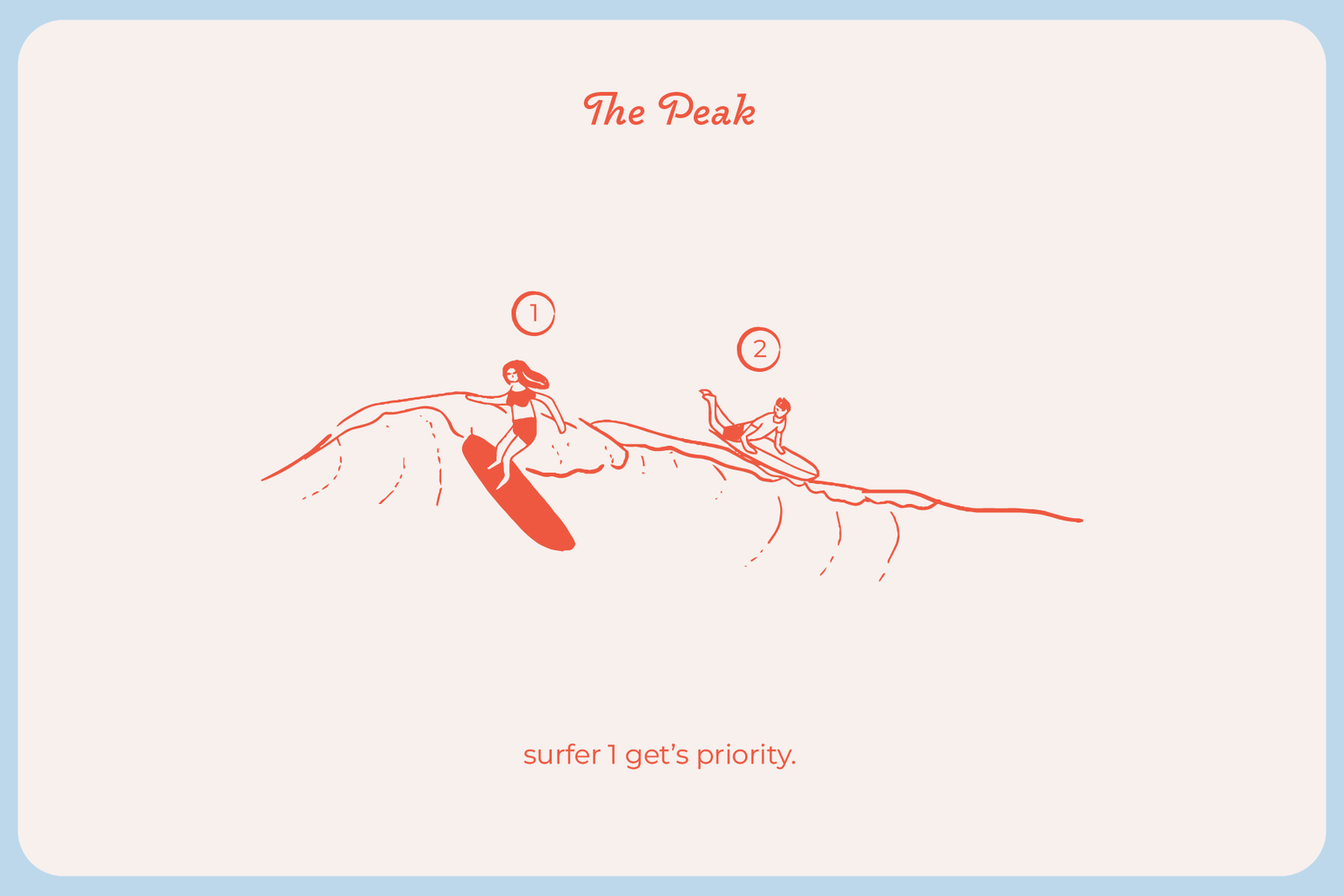
The golden rule: whoever’s closest to the wave peak has priority.
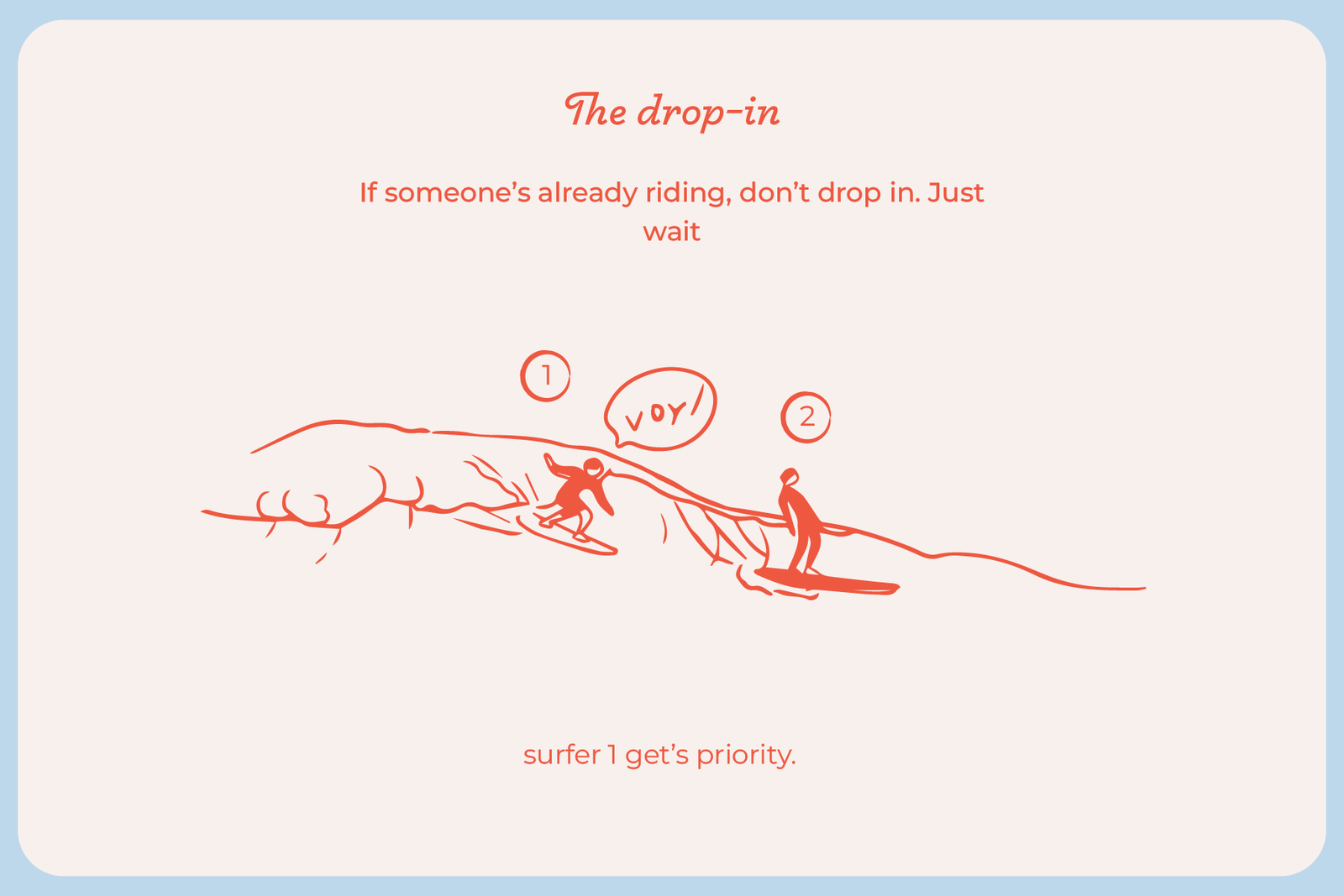
If someone’s already riding, don’t drop in. Just wait — it’s not the last wave in the Ocean. Seems obvious, right? And yet…
02. The Line-up
This is humanity’s simplest invention: the queue
Banks have it. Coffee shops have it. Airports have it. In surfing, we call it the line-up. While every mentally sound human respects this most basic and time-tested rule on land, something strange happens when certain people step into the Ocean with a board strapped to their ankle. It’s as if Ursula the Sea Witch herself casts a spell on them. Suddenly, otherwise decent folks morph into frothing, uncivilized lunatics — completely forgetting how to wait their turn.
Now, unlike on land, the surf “queue” isn’t so clear-cut. A line-up has its own murky
sub-rules:
2.1 Locals first. Locals always? Not quite.
When you’re invited to someone’s home, you don’t kick your shoes onto the table and hog the fridge. Same at a surf break. Keep your distance at the peak, let the locals pick the cherries, and you’ll still have your waves.
A smart strategy is to stop fighting a battle you’re unlikely to win on the inside and instead sit a little deeper, on the second section. Quite often, the first pack spends so much energy fighting for the inside that they end up on the first closeout — while you’re sitting quietly on the second section, with a much better chance of picking off a clean, open wave.
Respect doesn’t mean worship. Locals have a very understandable sense of belonging, but they don’t own those square metres of Ocean. Having home advantage doesn’t mean they get to snake every wave like Poseidon personally signed the deed. Dropping in on visitors who’ve been patiently waiting? Going back straight to the peak, wave after wave after wave, until the ocean runs dry? That’s not local pride, that’s just being a dickhead.
Being a good host should mean sharing some stoke — and some waves too. Being a good host should mean sharing some stoke — and some waves too. Or, if you see a clueless tourist beginner, share a little local knowledge and teach them how things work instead of simply giving them shit.
2.2 Frequency Beats History
A word to the wise, Limeño: if you surfed this spot 30 years ago — and we know, because you’ll tirelessly remind everyone that you were one of the first to surf this paradise, back in the day, when there were no lights, no hotels but… blah blah blah — but only pop back once every decade, don’t expect the same local respect as someone who’s been paddling out here every morning for the last 15 years.
2.3 Skill Matters (and So Does Humility)
Beginner or intermediate? Do yourself a favor — don’t paddle straight to the peak and square off with locals and rippers. Hang back a bit on the second (or third) wave. You’ll avoid humiliation, get waves more easily, and maybe even learn something by watching.
Now let’s go back to some other important commandments:
~ Miss a Wave? Back to the Queue
This one stings. Many beginner surfers don’t seem to know this simple rule — and some experienced ones pretend not to. If you paddle for a wave and blow it — whether you wipe out or just miss it — you’ve lost your turn. Think Monopoly: “Go directly to jail. Do not pass Go. Do not collect $200.” Harsh? Yes. But fair.
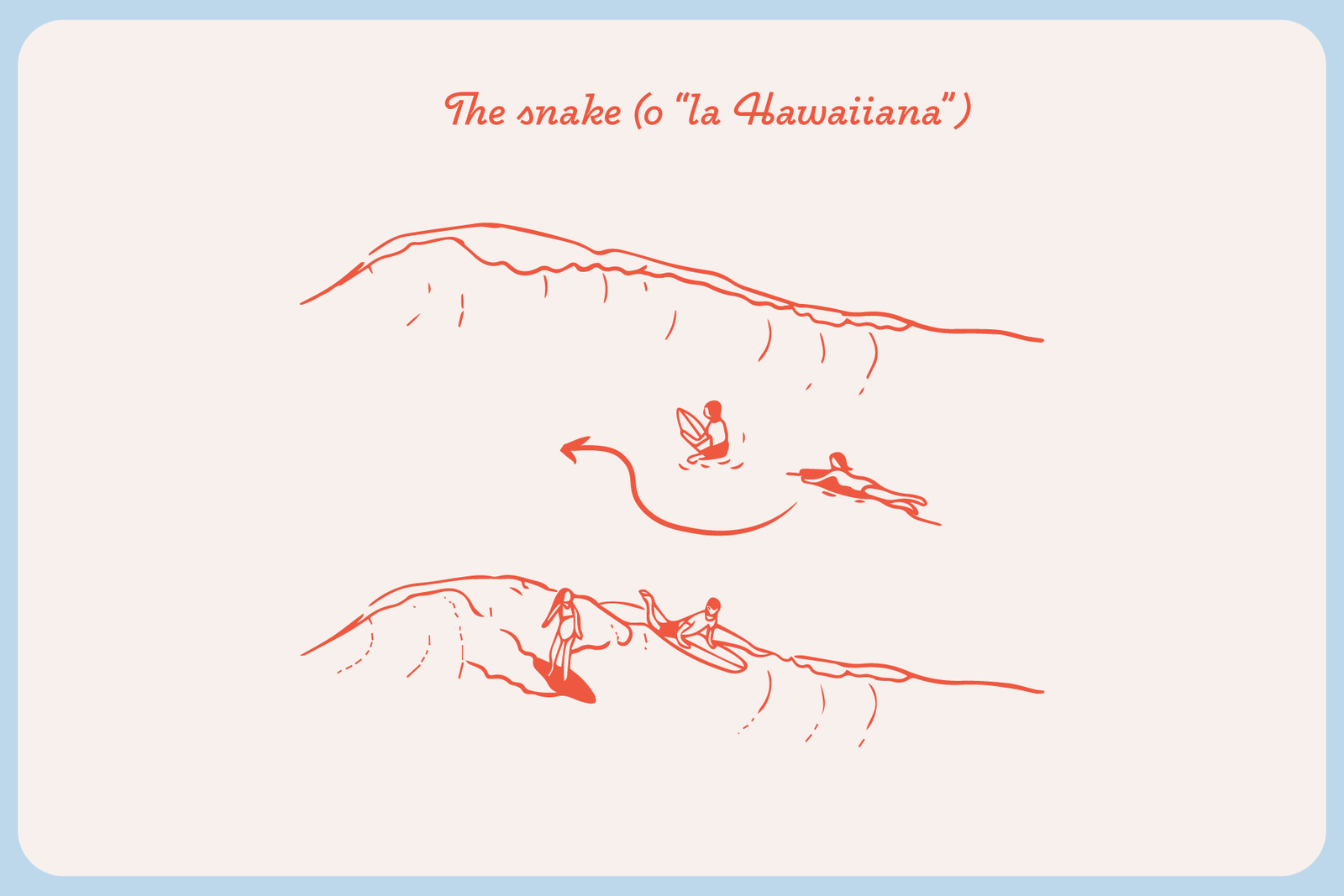
~ Thou Shalt Not Drop In (or Snake, or commonly called “la Hawaiiana”)
• Drop-in = is like slapping someone in the face. Dangerous, rude, and strictly forbidden.
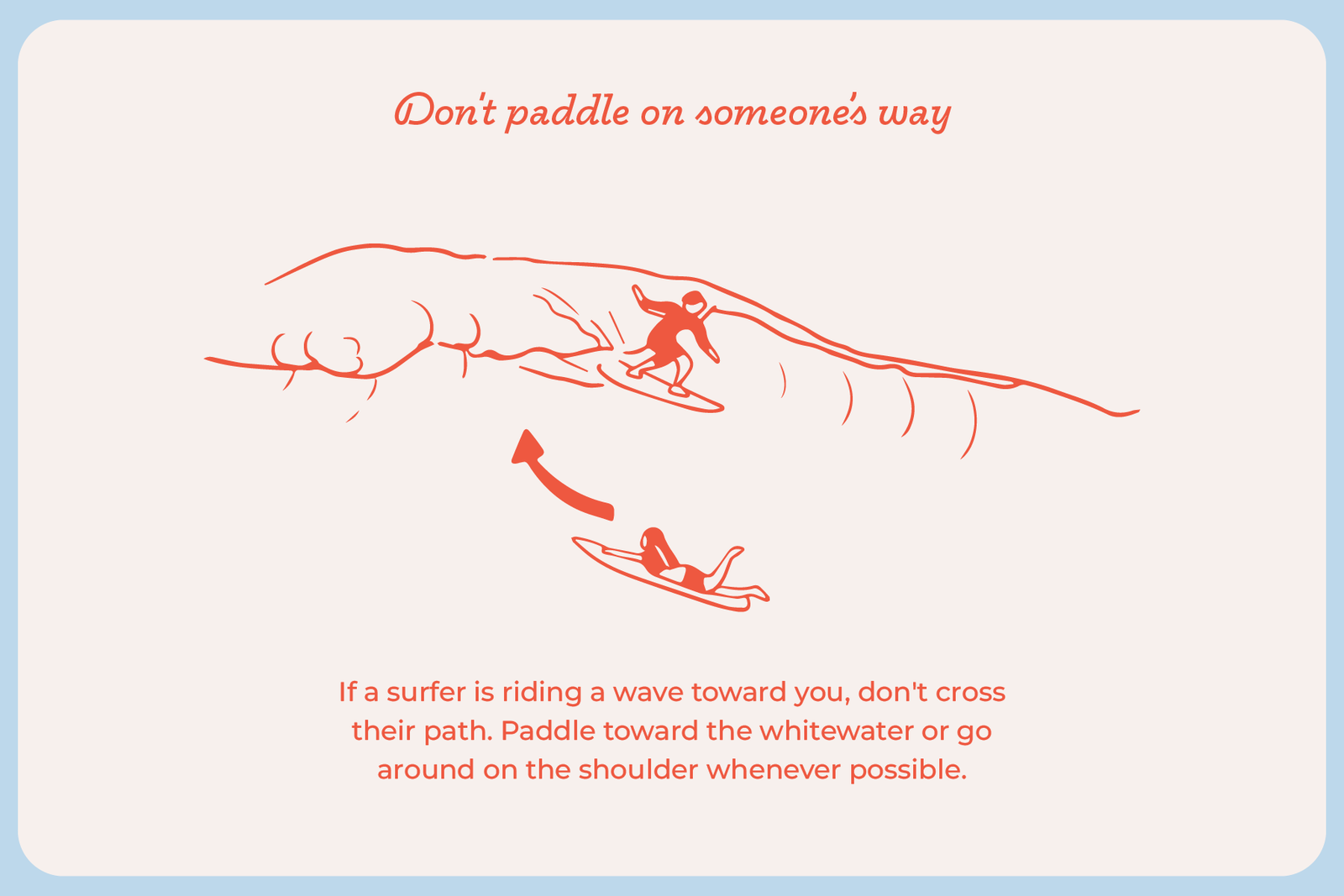
• The Snake = It’s like a drop-in, but sneakier. Slipping around to the inside of the wave while someone else is already paddling for it. Some think it makes them look clever, but it’s dodgy — everyone sees it, and it’s definitely not cool.
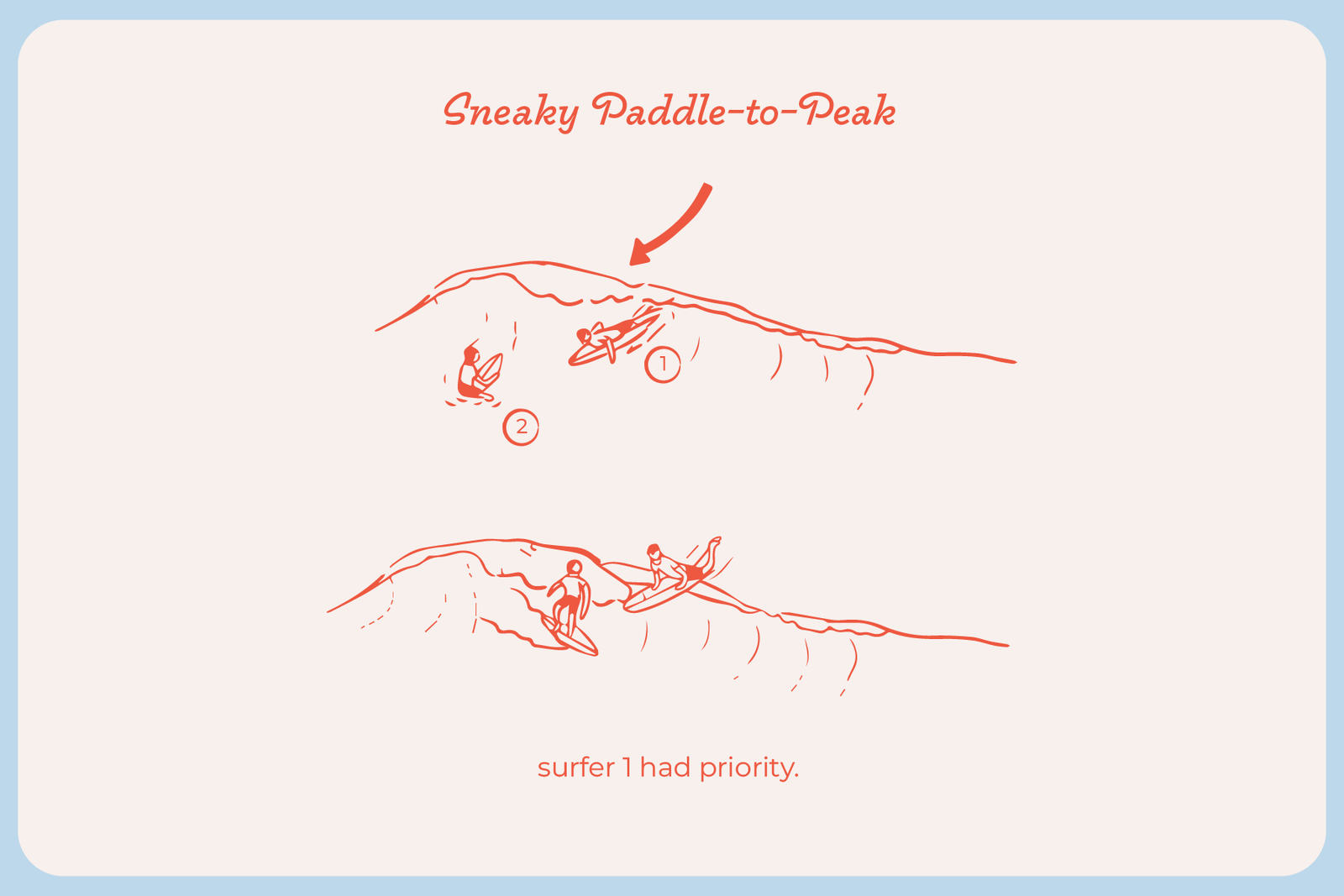
• Sneaky Paddle-to-Peak = when you think being a meter closer to the peak entitles you to a wave that someone’s been paddling for since last Tuesday. Ma che cazzo!?
~ Accidents Happen
— But Own Them
Did you mess up? Apologize. A quick “sorry, mate” goes further than you think. But beware of the serial apologizers — the ones who snake, drop in, smile, say sorry, throw a shaka… and then do it all over again. Buy yourself a conscience, por favor, amigo/a.
~ Beginners: Take Lessons!
Don’t just grab a board and launch yourself into chaos. Without knowing how to paddle, duck dive, or read the ocean, you’re not only a danger to yourself, but to everyone else, especially in point breaks like Máncora’s surf point. Get a teacher. Learn the ropes while participating to the local economy. Humility now saves pain later.
~ Respect the Ocean
If surfing thrills you — that magical feeling of gliding on water, weightless and free — remember who makes it possible: Mother Ocean. She gives us waves, joy, and life itself. It’s only fair to give something back. As surfers, we naturally become guardians of this fragile ecosystem that sustains us all.
The Ocean isn’t just a playground — it’s a living, breathing force we depend on.
Here are a few simple ways to show your respect:
• Leave the beach cleaner than you found it. Pick up trash whenever you can — even if it’s not yours.
• Support local (or international) NGOs working to protect our oceans and coastlines.
• Choose eco-friendly gear. Buy second-hand boards or sustainably made equipment whenever possible.
• Go green in the details. Use organic wax, reef-safe sunscreen, and sustainable
clothing brands.
The ocean gives us everything — let’s make sure it keeps giving. 🌎💙
~ The main point is to have fun
At the end of the day, surfing isn’t about being the best. It’s about laughing at your
wipeouts, high-fiving strangers, and coming out buzzing with saltwater in your veins.
No fun = no point.
Why does all this matter?
Because:
🔥 It keeps you out of trouble
🌈 It lifts the vibe of the line-up
🤙 It makes you part of the crew
🌊 And because a good surfer doesn’t just surf well… they vibe well too
That’s the surf code, Máncora-style. Follow it, and you’ll keep the lineup sane, the
vibes flowing, and the sea smiling back at you. 🤙

Leave a Reply